The Real Challenges of Entering the Saudi Market
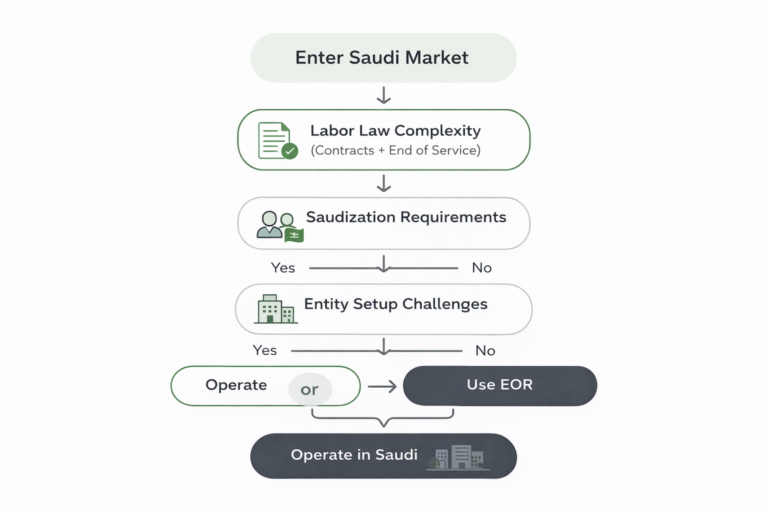
Start with labor law basics. Employment contracts are either fixed term or open ended, and the difference matters more than it might seem. Open ended contracts offer stronger protections for employees and put more obligations on employers when the relationship ends. End of service benefits are mandatory calculated at half a month’s salary per year for the first five years, then a full month per year after that. These aren’t discretionary bonuses. They’re legal obligations that begin accruing from day one and need to be factored into your financial planning from the start.
Then there’s Saudization, formally known as Nitaqat. This is the nationalization quota system that requires companies to employ a certain percentage of Saudi nationals, and that percentage varies depending on your industry. Retail sits around 25%, and other sectors have their own thresholds. The system rates companies on a color scale green means you’re compliant and can operate normally, red means you’re not, and red brings hiring bans and fines that can reach 100,000 SAR per violation. For a company building a team from scratch, often hiring for specialized roles where local talent is limited, hitting those targets immediately is genuinely difficult. It’s one of the areas where having experienced local support pays for itself quickly.
Setting up your own legal entity is the other major hurdle. It requires a lot of upfront cost, and the registration process can take several months. You’ll likely need local partners, which means sharing equity and decision making. And once you’re registered, the compliance obligations are ongoing.
What Working With an (EOR) Employer of record Actually Looks Like
Once you’ve identified a candidate, the EOR takes over vetting, health checks, background screenings, and a compliant employment contract drafted to Saudi standards. You approve, the employee signs, and most people are working within two weeks.
From there, payroll runs without you managing it. Salaries go out on time, GOSI contributions are handled correctly, and everything gets reported to the relevant authorities on schedule. When disputes arise and sometimes they do they land on the EOR as the legal employer, not on you. The same goes for termination procedures, expat visa sponsorship, and Iqama management. it’s largely hands-off.