
Walk into a well run supermarket and you’ll notice something immediately certain products seem to jump off the shelf at you. The placement feels intuitive. The displays are clean and well planned. Nothing is out of stock. That’s not an accident. That’s merchandising done properly.
In Saudi Arabia’s retail environment right now, the difference between brands that grow and brands that stop growing often comes down to execution at the shelf level. Not strategy documents. Not marketing budgets. What actually happens when your product meets the shopper.
Saudi retail has changed significantly and it’s still changing. Vision 2030 has accelerated the shift toward modern retail formats, and the shoppers filling those stores are more aware and more demanding than they were five years ago. Simply getting your product listed and expecting sales to follow doesn’t work anymore.
What makes Saudi consumers interesting is the combination — digitally fluent but still deeply attached to the physical shopping experience. Most purchase decisions in grocery and FMCG still happen at the shelf. What’s there, how it looks, and whether it’s actually in stock in that moment determines whether you make the sale or your competitor does.
Cultural timing matters too. Ramadan displays, Eid spikes, National Day promotions — these aren’t optional considerations. They’re moments when shopper traffic surges and poorly prepared shelves lose sales that won’t come back.
The honest case is simple: better in-store execution leads to more sales. Brands that take merchandising seriously consistently outperform those that treat it as an afterthought.
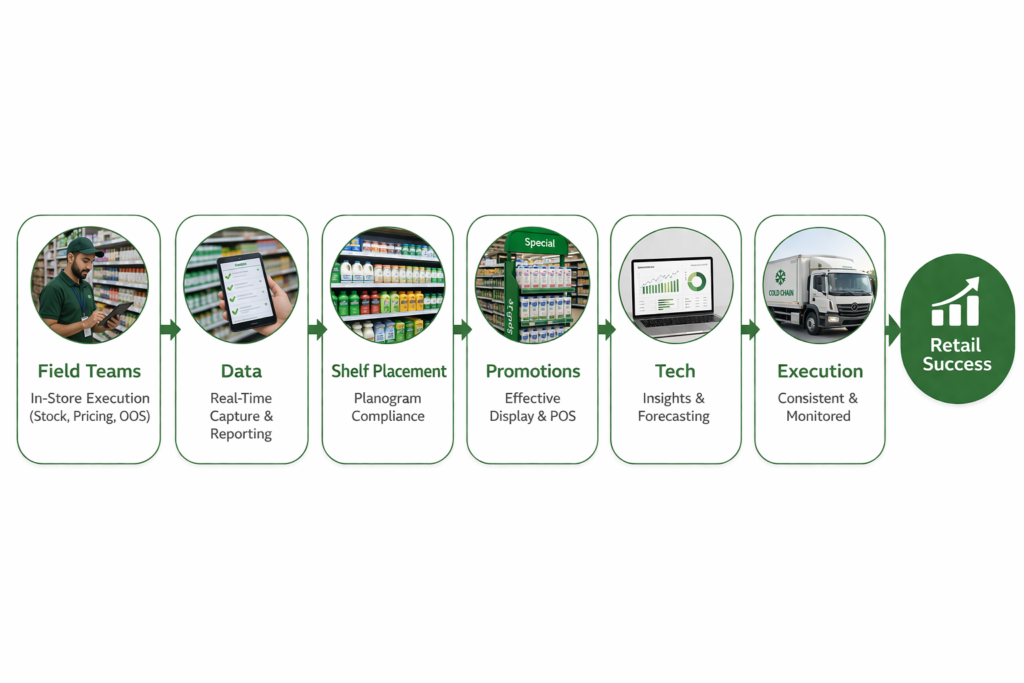
The foundation is field teams in stores regularly not occasionally. Good teams do more than restock shelves. They rotate stock correctly, catch pricing errors before customers do, identify out of stock situations and trace them back to their source. Modern field teams work with mobile audit tools that capture photos and log inventory in real time, giving brand managers visibility they simply don’t have otherwise. One properly documented store visit is worth more than ten that leave no record.
Planogram compliance is equally important. Major Saudi retailers dictate exactly where products sit on the shelf, and losing that position means losing the shelf space you spent months negotiating. Beyond compliance, smart space management is a genuine competitive advantage. Eye level positioning, complementary product adjacencies, vertical category blocking these aren’t minor details, they’re what separates brands that move product from brands that don’t.
On promotions, timing and execution consistency are everything. End caps, floor displays, shelf wobblers and point of sale material drives unplanned purchases when it’s properly installed and maintained. It costs you sales when it’s sitting in a stockroom or last month’s campaign is still up because removal wasn’t coordinated. Professional partners handle the full cycle, and retailers notice the difference.
Technology has transformed what’s possible operationally. Real time data capture means a stock issue spotted in a Jeddah hypermarket can be in front of a category manager within minutes. AI-driven demand forecasting helps brands get ahead of Ramadan surges and seasonal peaks rather than reacting to them too late. And for temperature-sensitive categories like dairy, meat, pharmaceuticals and cold chain monitoring from warehouse to shelf isn’t optional in Saudi Arabia’s climate. It’s essential.
Channel knowledge is non-negotiable. Hypermarkets, pharmacy chains, electronics retailers, and convenience stores each operate differently, and a partner with deep experience in one doesn’t automatically transfer that to another. Ask for specific case studies from your channel and your product category. Vague references to strong KSA experience tell you nothing. Concrete examples of what they’ve executed, what results followed, and what went wrong that tells you something real.
Geographic coverage matters more than most brands factor in. Riyadh, Jeddah, and Dammam are obvious starting points, but Tier 2 cities Buraydah, Tabuk, Abha are growing fast as retail infrastructure expands beyond the major hubs. A partner whose coverage stops at the big three will leave gaps that competitors will quietly fill. Ask specifically how they handle secondary markets and what their team density looks like outside the main cities.
On compliance, your partner’s labor law obligations become your operational risk. A merchandising provider with Saudization problems or regulatory issues doesn’t just create legal exposure it disrupts your shelf presence at exactly the moments you can least afford it. Clean compliance records and clear training standards aren’t a formality. They’re the foundation everything else sits on.
Saudi retail is becoming more competitive. More international brands are entering the market, and local retailers are being more selective about which products get shelf space. At the same time, there’s less room for mistakes or poor execution.
Merchandising is no longer just a back-office task. it plays a direct role in how brands compete.The brands that get it right are moving ahead, while others fall behind. The shelf is where you either win or lose in Saudi retail, and getting your execution right from the start is one of the most important decisions you can make.

